Price each piece through to use
Create a row for each item you expect to keep, repair or buy. Record the current quote, tax where applicable, delivery, assembly, any required accessories and the cost of removing old furniture. A wardrobe may require extra storage fittings, and a secondhand table might need a hired vehicle. Leave space for a return fee or replacement cost where it could influence the choice.
Write down the date and location of each quote, and note what is included. Keep a separate line for money you have already committed. When a cost is missing, mark it pending and avoid treating that row as a final price. If you have a fixed spending limit, decide how much of it to leave uncommitted based on the outstanding costs you can identify.
Pay first for the change that unlocks the room
Divide the list by what you need on move-in day, what you can live with temporarily and what depends on another decision. Buy the item with the hardest size or functional constraint after measuring its position and delivery route. A room that needs a place to work next week can wait for the bench that completes an entrance.
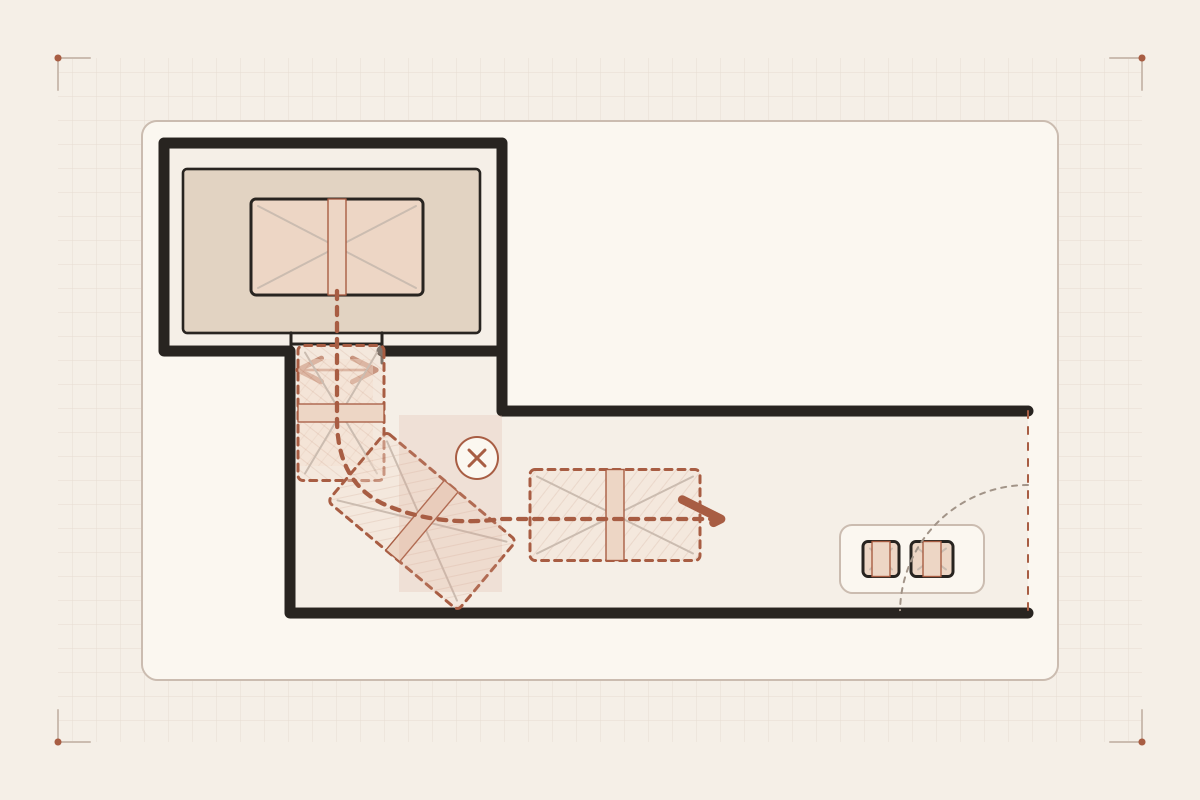
Compare the immediate purchase with a realistic substitute. A free inherited bookcase still takes space and may create spending on transport or repair. An adjustable lamp you already own can give you time to learn where you actually read. For large pieces, check packaging and access before you compare quotes so a planned saving survives the door and stair turns.
Decide what a cheaper substitute must preserve
Write down the qualities you are paying for before you shop. For a dining table, those may be stable seating for your household, a usable width for meals and edges that work beside the main route. Set a shortlist of features that can change, such as the finish, manufacturer or whether matching chairs arrive together.
Keep a running total as each item is confirmed. If the estimated cost grows, use your priority list to choose a specific delay or change. Recalculate the room before paying for another piece, especially if the furniture requires help with delivery or has a restricted return policy.
An illustrative furnishing budget in local currency units
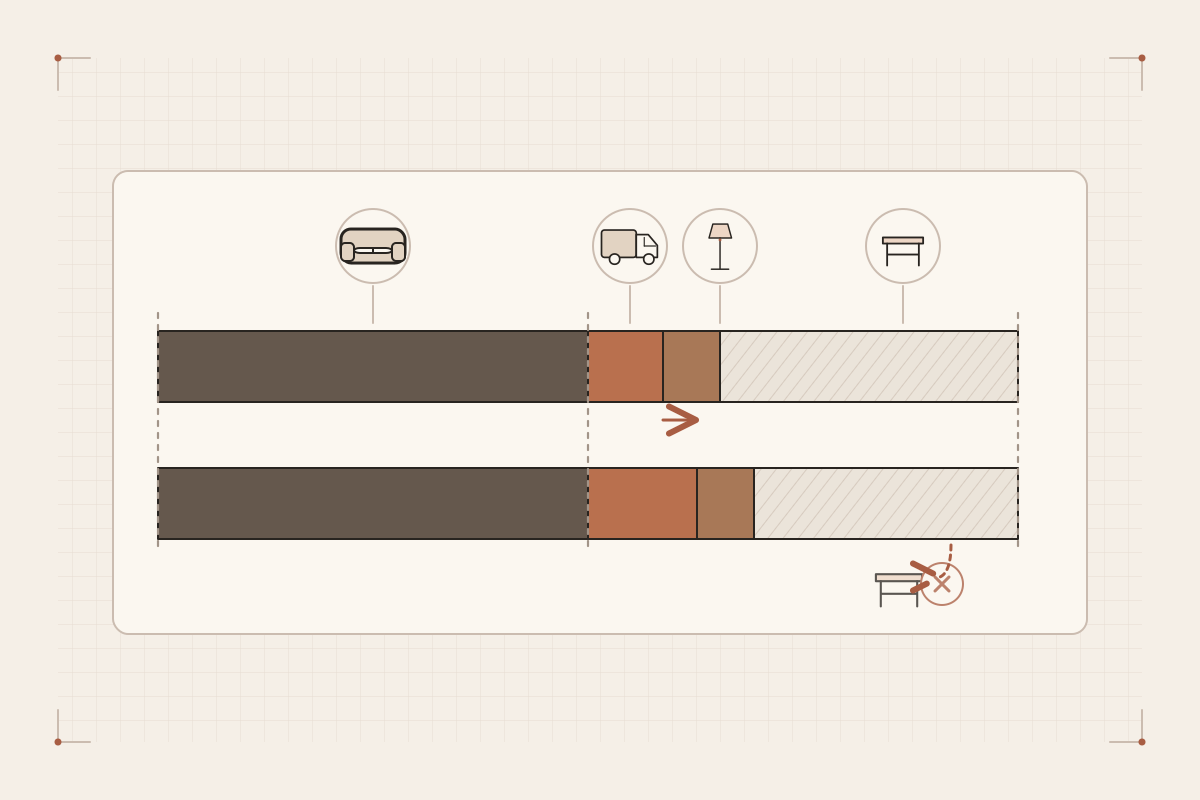
A household has 1,500 units for a living room. It reserves 750 for a sofa, 130 for quoted delivery and 100 for a lamp. The remaining 520 can cover a side table and rug, plus the amount the household chooses to keep available. When the delivery quote rises by 60, postponing the side table keeps the sofa and task lighting funded without increasing the total.
Limits and checks
- Prices, taxes, availability and consumer terms depend on the seller and location. Keep quotes current and confirm the total before ordering.
Sources and further reading
- Room & Board measuring for furniture delivery — Provides a retail example of checking the delivery route before committing to a product.