Judge the concepts against the same brief
Write the hard limits before looking at the images again. Include the pieces that need to stay, required access, the total spend and any change that depends on permission or availability. Record whether the concept appears to meet each point, and write down what would settle anything uncertain.
Use the same everyday test for both drawings. If the new room must handle calls and dinner, walk through each activity on both plans. Check the routes with actual product dimensions and open doors. Write where each plan makes life better or creates a new problem.
Distinguish the visible idea from the item you can buy
Ask which objects are exact specifications, which are examples and which are custom. Confirm dimensions, finish, availability and delivery where they affect the choice. A compelling illustration may rely on a desk size that is different from the retail model. Mark this as a condition to resolve before the option can be approved.
Use the physical sample comparison for the colors and surfaces you will keep whenever a material plays a big part in the concept. Review both options from the same viewpoints. If one image shows a route and the other does not, use the drawings or ask for an equivalent view.
Make a decision with a short revision request
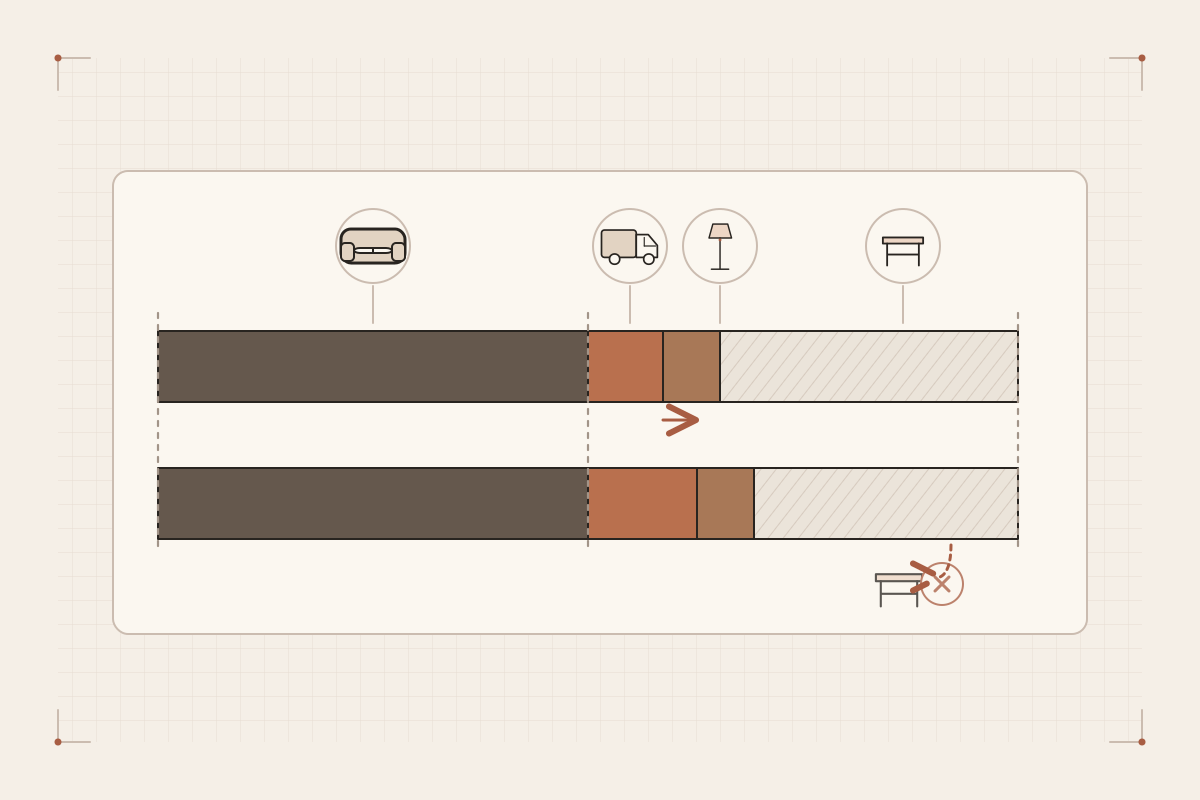
Compare costs using the same assumptions for furniture, delivery, assembly and any separately quoted work. Give both concepts the same price date when possible. Decide whether something that costs more solves a daily problem you can point to. If an uncertain product or service dominates the cost, ask for a practical alternative before treating the estimate as settled.
State the concept you want to develop, what you want to keep and the condition you want resolved. Limit the request to the changes that matter most. Verify that each requested change can work with the rest of the plan. Mixing individual pieces from two options may alter sightlines, clearances or costs. Keep a dated note of your choice and the open questions so you can revisit it before ordering.
An illustrative choice between two living room concepts
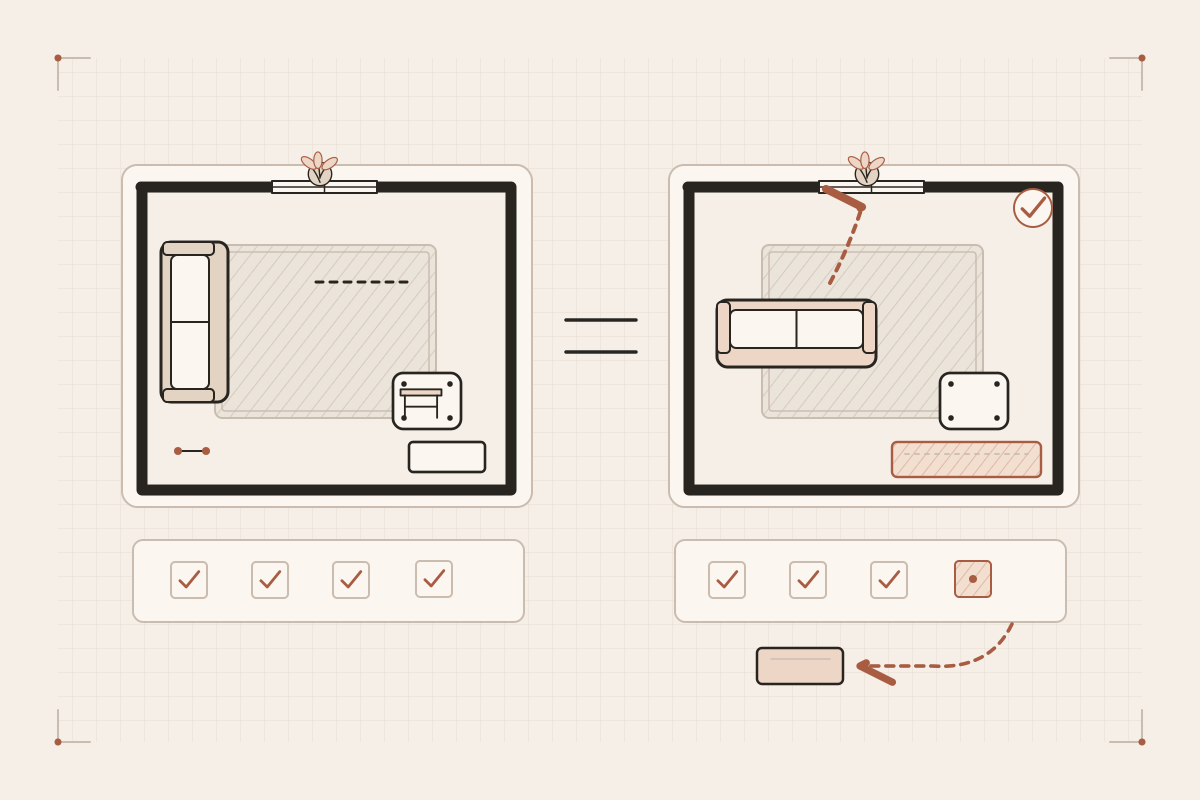
One concept moves the sofa to face the garden and adds a custom cabinet. The other keeps the sofa near an existing outlet and uses a portable side table. The household prefers the garden view but needs a decision before the custom quote is available. They request a priced alternative for that cabinet and keep the view as the condition to preserve.
Limits and checks
- Renderings and early plans support comparison. Confirm finishes, measurements, installation feasibility and actual prices before authorizing purchases or permanent changes.
Sources and further reading
- Havenly design process — Illustrates one provider’s distinctions between initial ideas, concept review and later deliverables.