Build around the materials that stay
List the visible finishes you are keeping in order of how much they influence the room. Flooring and a large sofa usually occupy more of the view than a small handle. Collect a fabric sample or a close-up of the retained finish to use when shopping, and bring purchased samples back to the actual room for the final comparison.
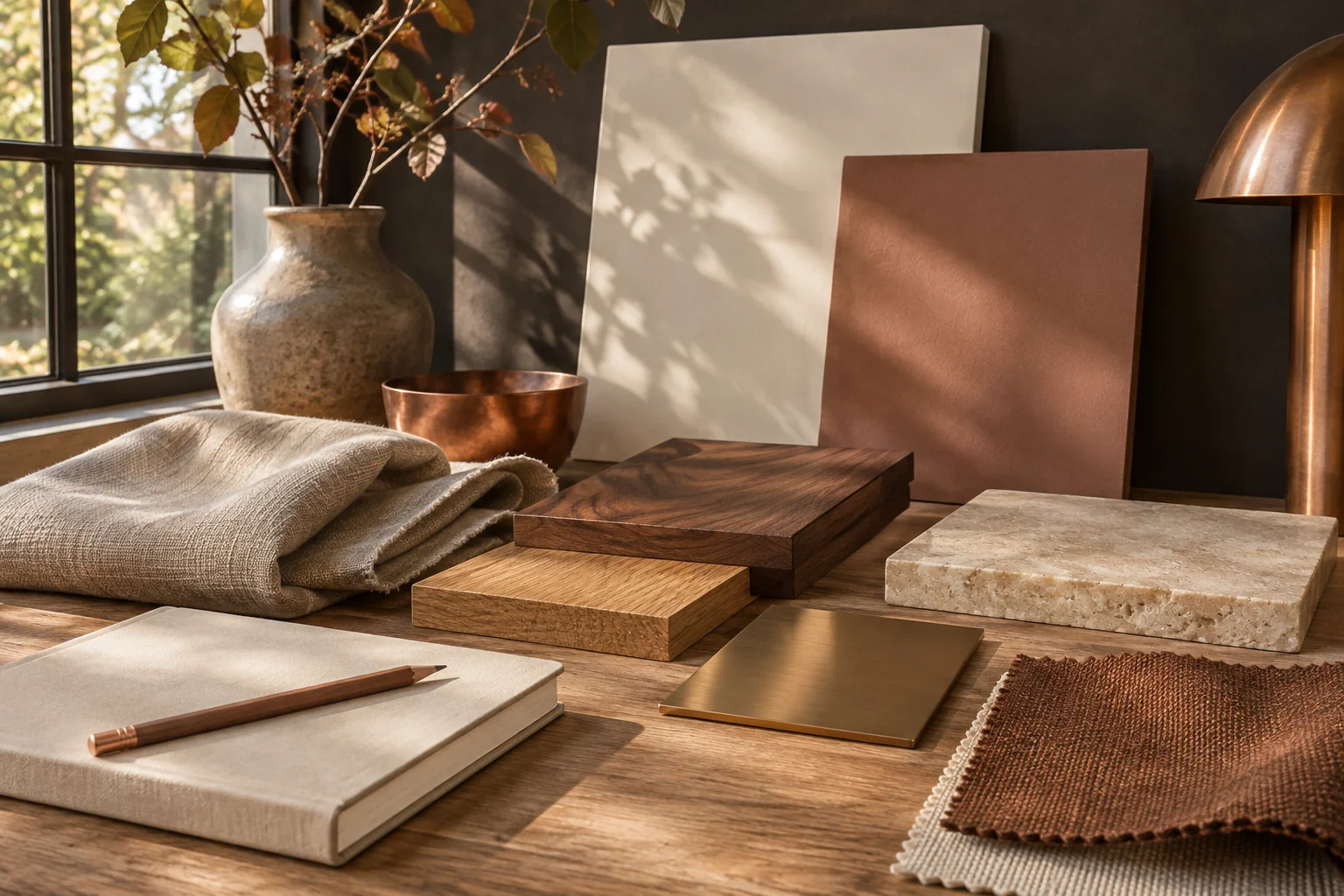
Pick the role of each new material. A wall can provide a quiet background for patterned upholstery, while a larger piece of wood might connect the two areas of an open room. Decide where you want contrast and which elements you want to read together. Identify the points at which one material touches another, such as the skirting, counter edge or doorway.
View the same samples in several positions
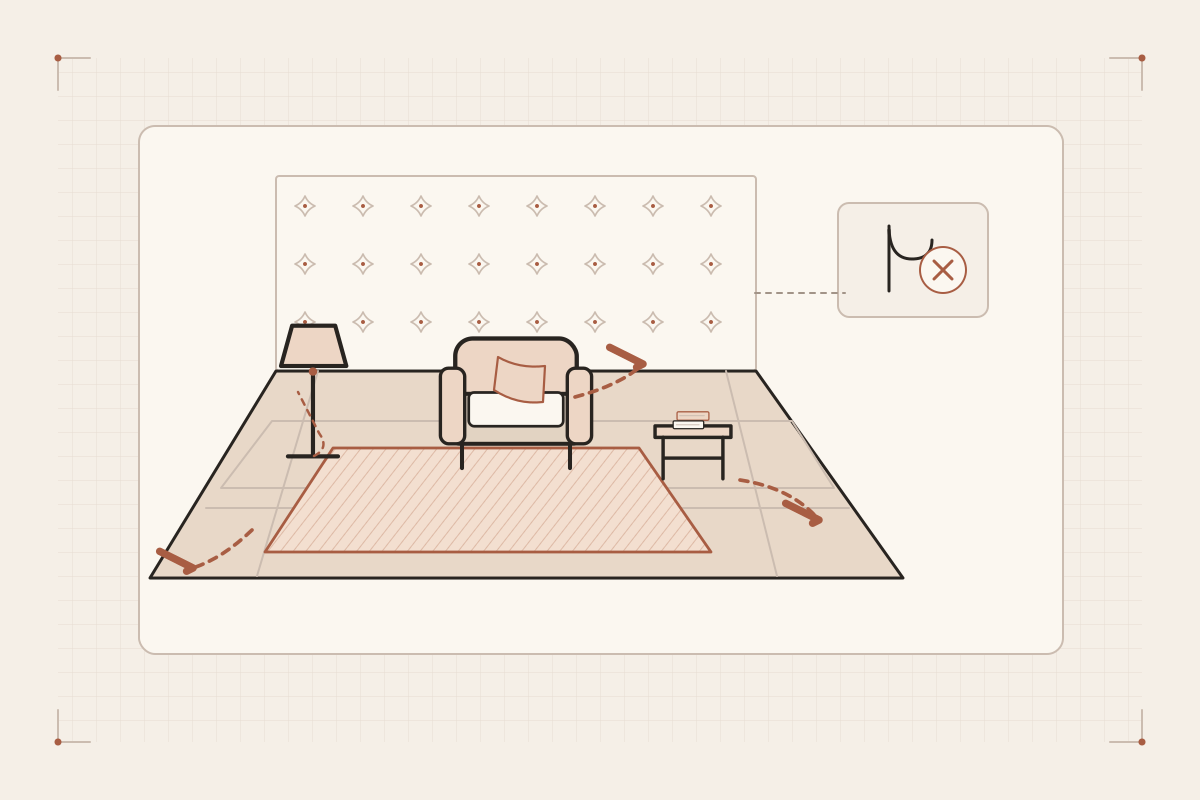
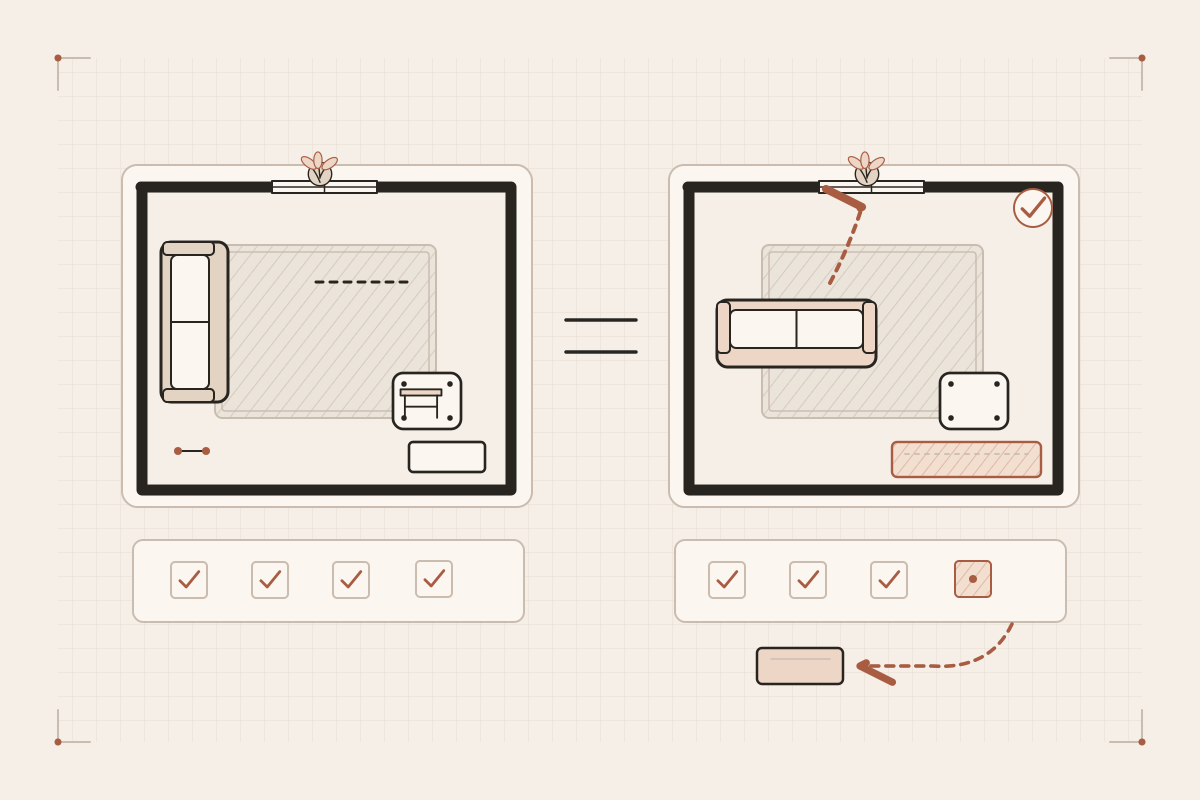
Put two or three candidates side by side against the surface they will meet. View a wall sample upright, and lay a counter or flooring sample where its surface would sit. Look from the door, from the usual chair and close enough to see sheen or texture. Repeat in daylight and with the lamps you normally use.
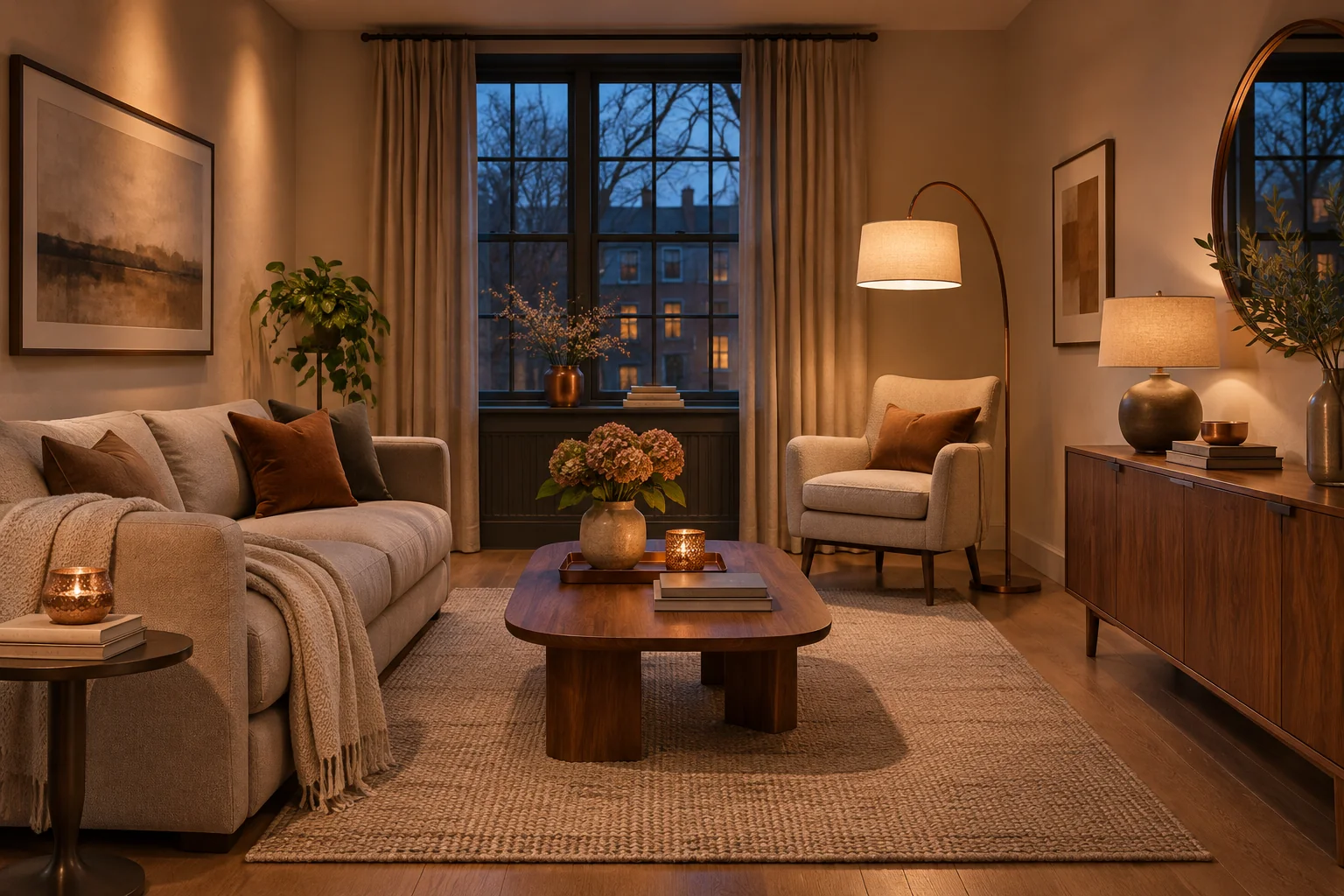
Keep notes in plain language, such as whether the fabric looks dull beside the floor at night or whether a glossy panel reflects the window. If you intend to change your bulbs, see how to test a room under its planned lighting combinations before approving a large finish order.
Record the exact sample and cleaning needs
Label each sample with the maker, reference, finish and intended location. Request instructions about cleaning, maintenance and exposure for the actual product. For a new floor or a large batch of tiles, discuss likely variation with the supplier and ask how the material is shown across several pieces.
Take a reference photograph of the accepted set so you can remember which samples went together. Hold on to the real samples for future checks. Paint, fabric and wood should each be judged for the use and conditions they will face as well as for color.
An illustrative palette for a room with an existing wood floor
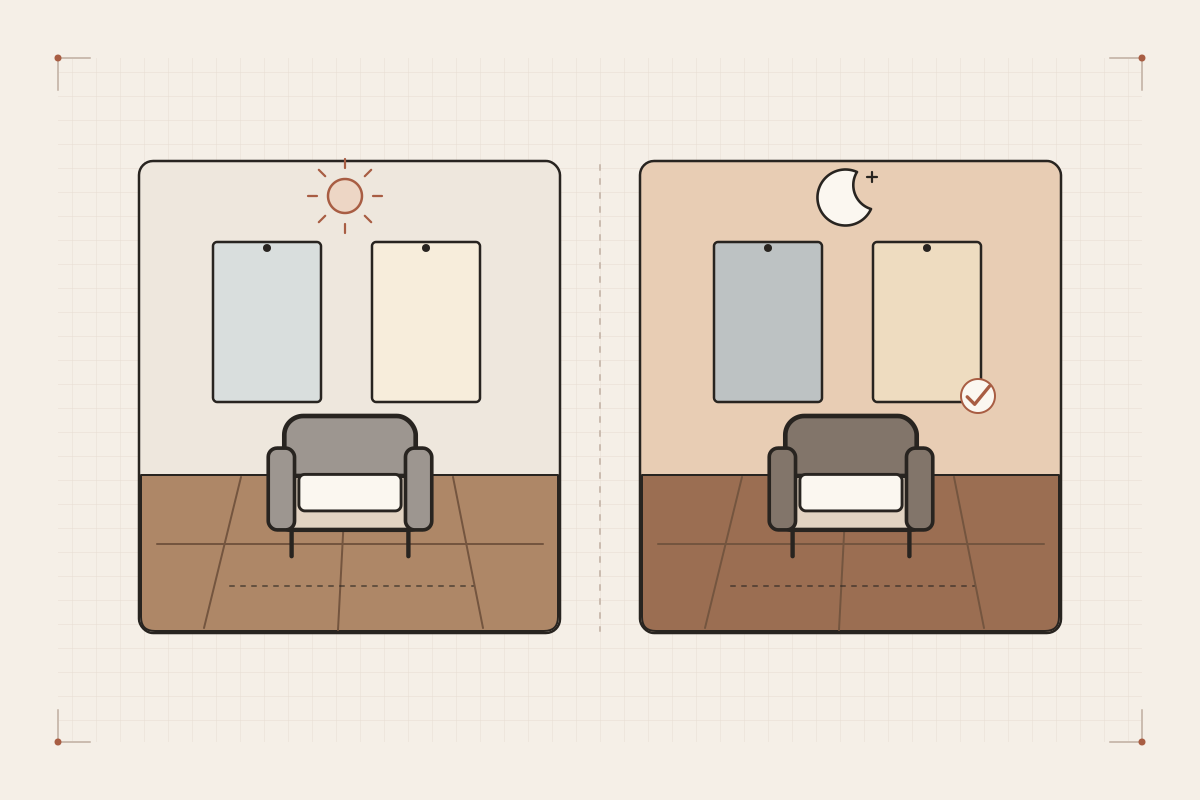
A household compares a cool pale wall sample with a muted ivory beside a warm wood floor and a grey sofa. Both look acceptable in morning light. At night the cooler sample looks separate from the rest of the room. The household checks the ivory in the darker corner too and records the specific paint product and finish it tested.
Limits and checks
- Samples can vary from the finished application by product, sheen, substrate, batch and lighting. Confirm the actual specification where matching or performance matters.
Sources and further reading
- Benjamin Moore color sampling FAQ — Discusses checking samples in natural and artificial light and differences associated with sample format, product and sheen.