Name the places that need their own light
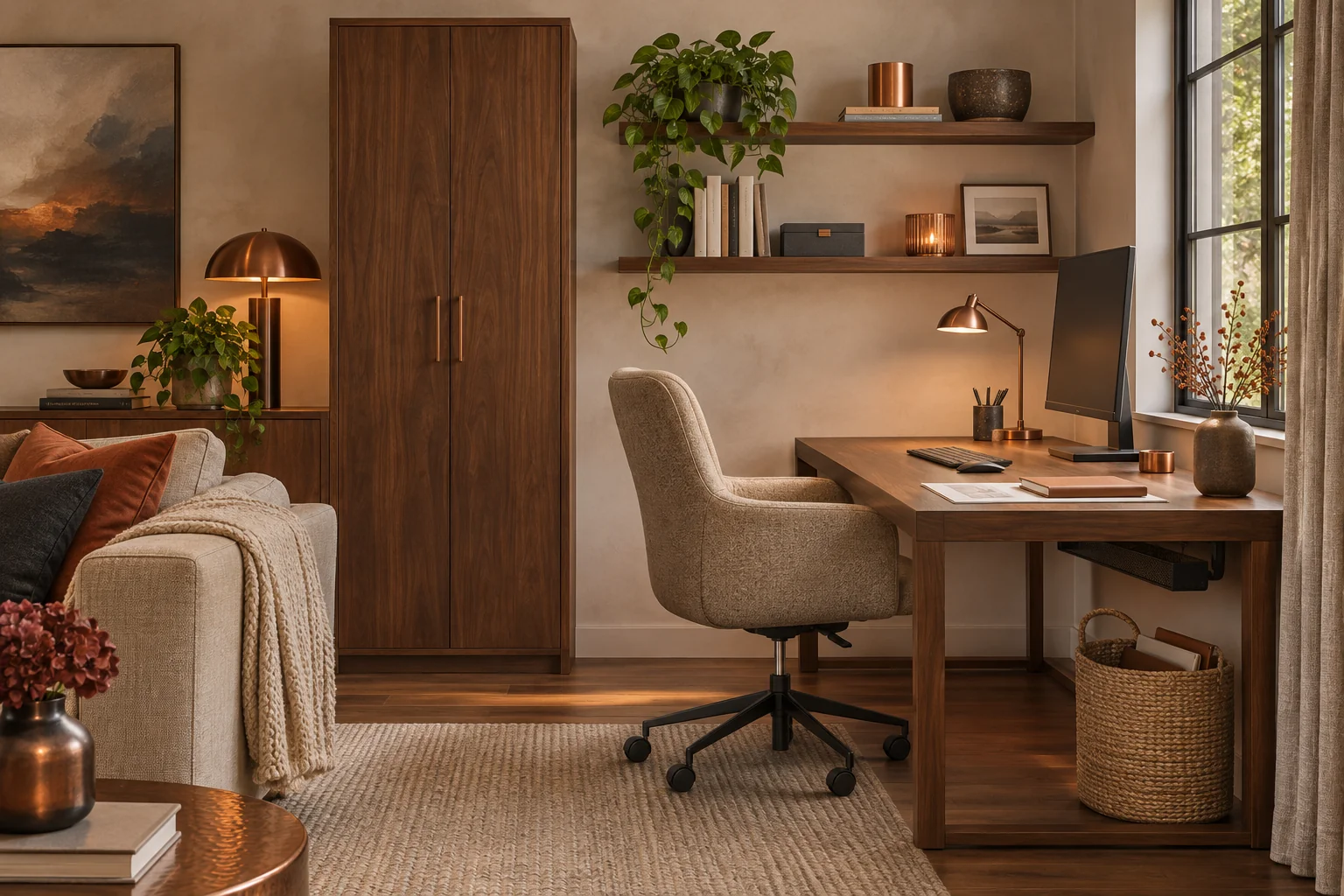
Write down where people need to read detail, prepare food, watch a screen or move between zones after dark. General lighting helps you see the room and its routes. Task lighting can put light on a book or desktop. A light on a particular wall, texture or object can give the room another point of focus during quieter use.
Walk through at the time when the room feels least comfortable. Check for a bulb or bright reflection visible at seated eye height. A lamp for paperwork should illuminate the actual paper without casting a shadow from your hand. Try changing the direction, lamp position or shade before adding a brighter source.
Look at output and appearance separately
Compare bulb output in lumens and energy use in watts. Lower color-temperature values in kelvin describe a warmer-looking light. The U.S. Federal Trade Commission gives roughly 800 lumens as the output of a traditional 60-watt incandescent bulb. Treat that as a comparison for a familiar brightness, and decide what output works in your room after factoring in the fixture, shade and position.
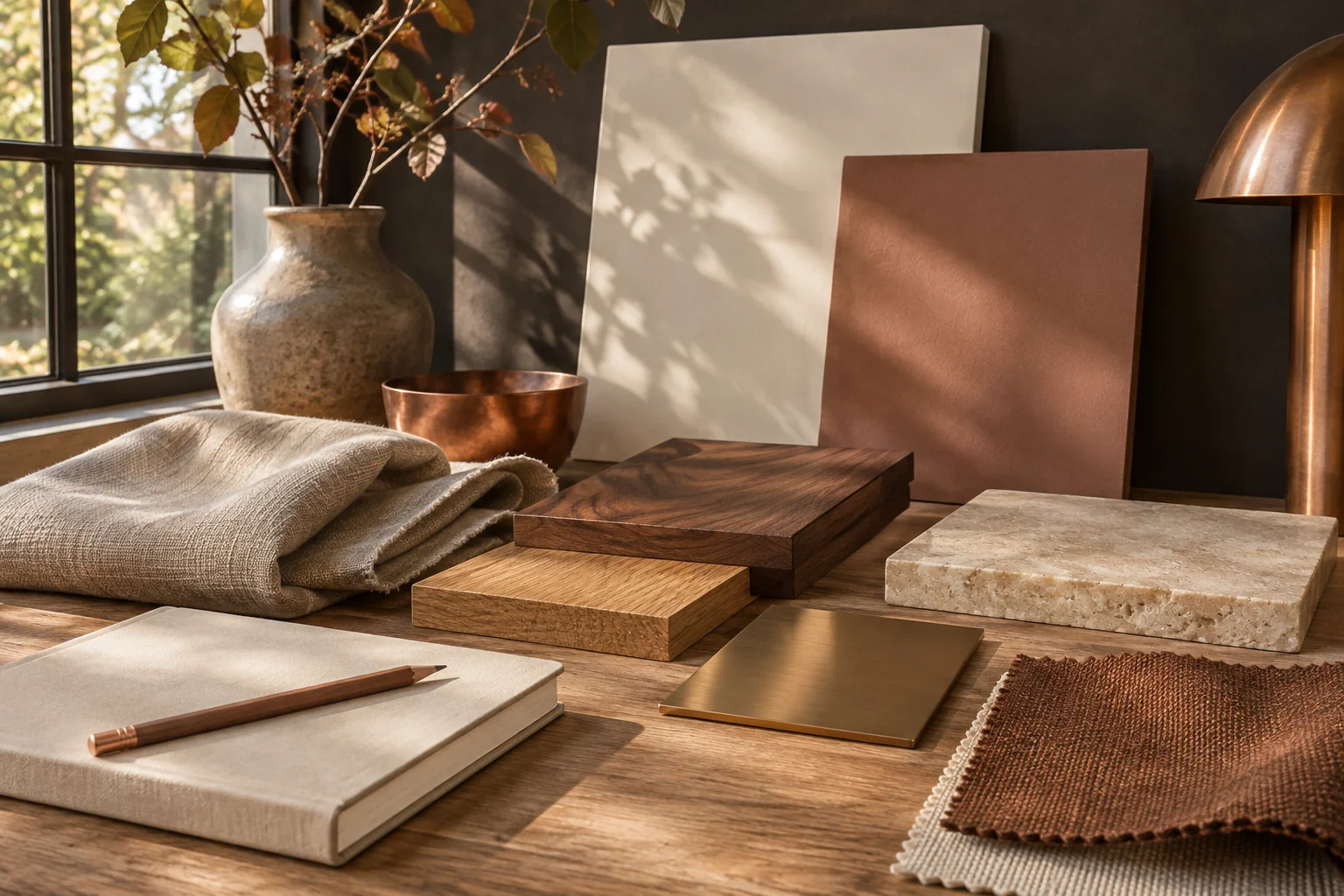
If you replace a bulb, check the fitting and compatibility with any existing dimmer, and follow fixture markings. Try samples with the shades and finishes you plan to keep. The sample test for comparing finishes in daylight and lamplight helps you judge whether the room still hangs together as the light changes.
Test different combinations before buying a fixture
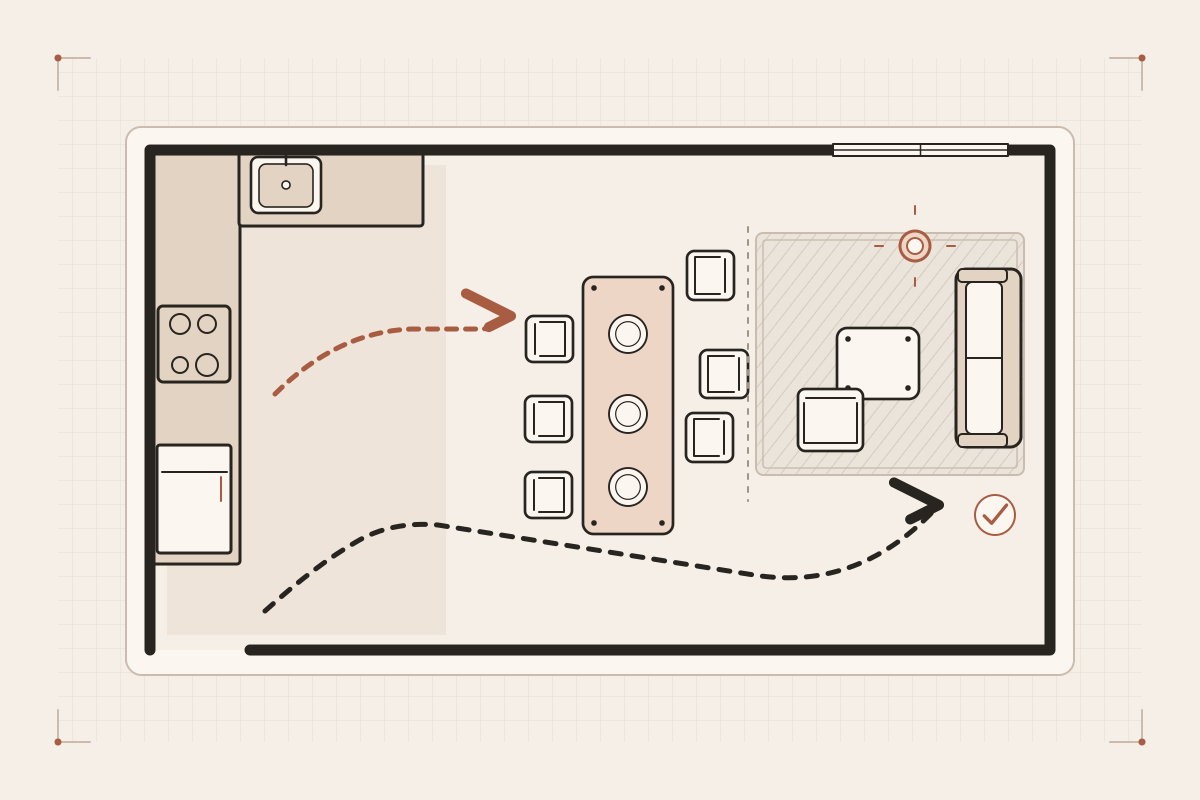
Choose a normal working combination and a quieter combination. For a shared room, keep enough visibility to walk while allowing each person to use their own light. Walk from the entrance to a chair and try the controls from the places you normally use them.
Write down which fixtures you turn on, which ones you leave off and what each change fixes. A portable lamp can trial the light from a new position. If you find the trial lamp is always on, decide whether the cord, base and control will suit permanent daily use.
An illustrative reading and television room
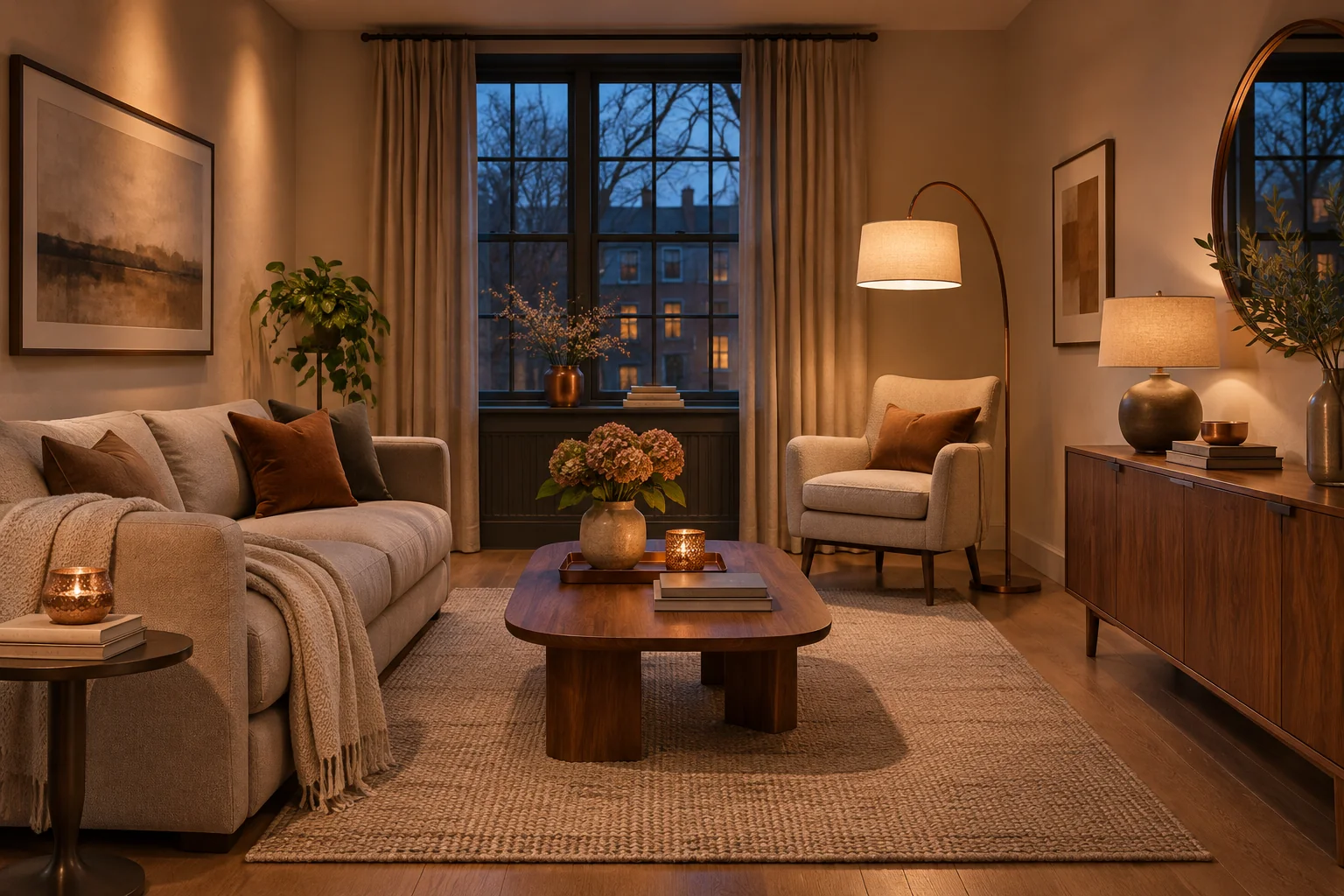
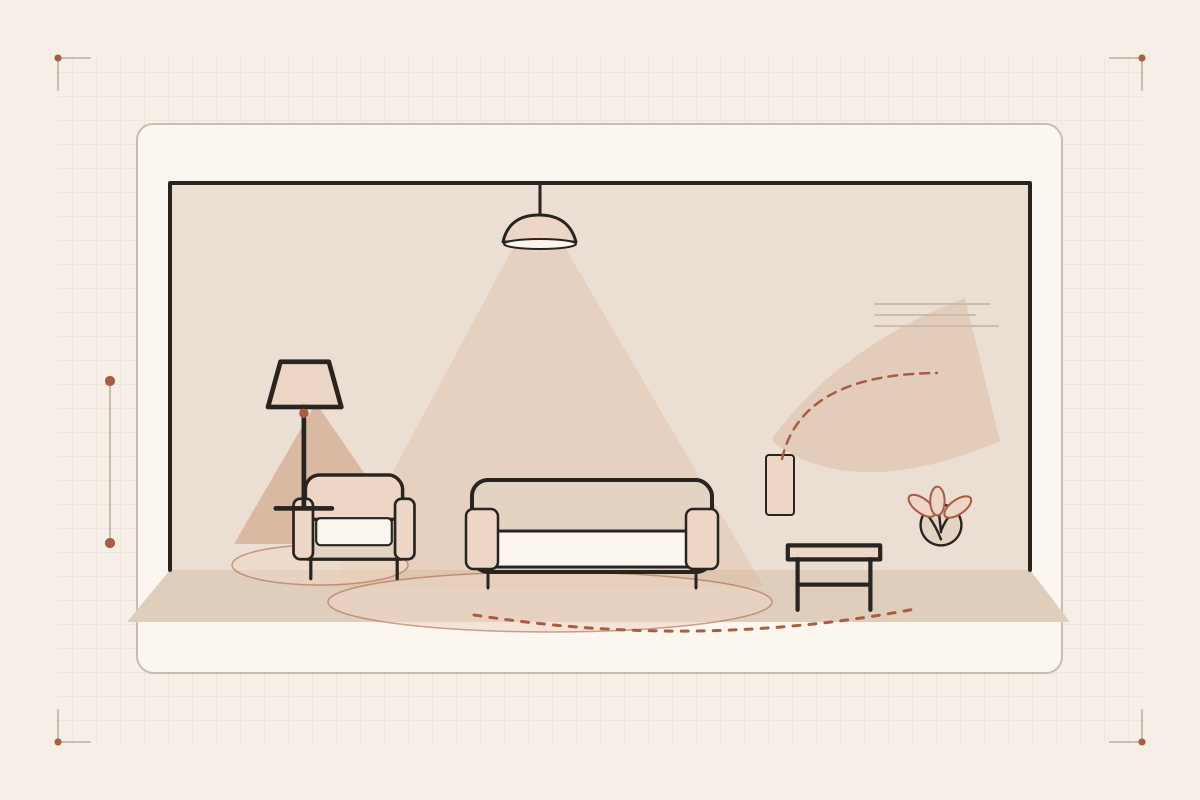
A sample room has a ceiling fixture opposite a glossy screen. The household trials a shaded lamp next to the reading armchair and a separately switched lamp that lights part of the wall. They adjust both positions while seated and check the route past the sofa with the overhead fixture switched off.
Limits and checks
- Room area alone cannot determine the light that reaches a task. Permanent wiring, lighting near water and fixture compatibility need checks specific to the installation and location.
Sources and further reading
- U.S. Federal Trade Commission Shopping for Light Bulbs — Explains lumens, watts, light appearance and the approximately 800-lumen comparison.
- U.S. Department of Energy Consumer Guide to Energy-Efficient Lighting — Explains the kelvin scale and compatibility between LED lamps and dimmers.