Sort what arrives at the door
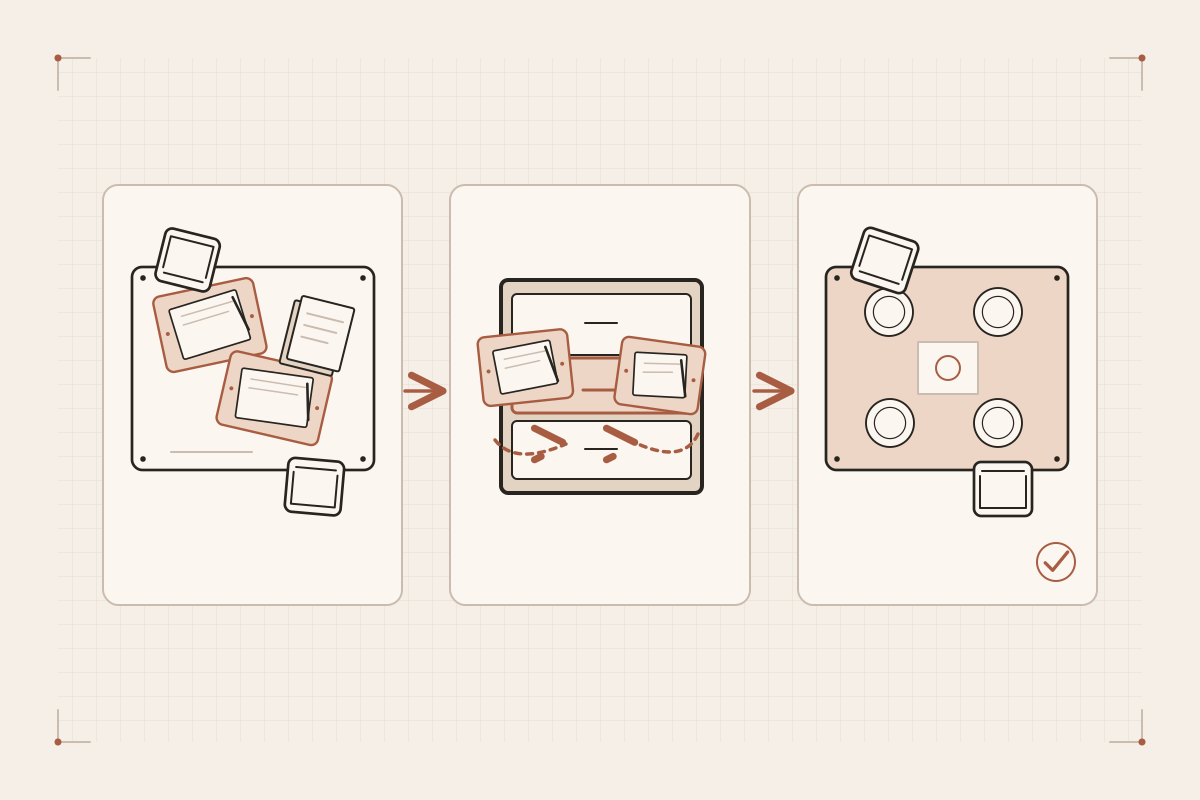
List the items that regularly land in the hall, then sort them by what must stay, what is waiting to be taken out, and what belongs elsewhere. Daily shoes, a key and a bag may need quick access. Spare footwear and off-season coats can live farther inside. Estimate the number of wet coats or pairs of shoes you see on the busiest day.
Give keys and small items a place you can reach when your hands are full. Decide where rain-soaked items can drain or dry without making the route slippery. Check the floor finish before choosing a tray or mat and follow its care guidance. If a mat interferes with the door or creates a trip point, try another position or product.
Check depth with storage open and coats hanging
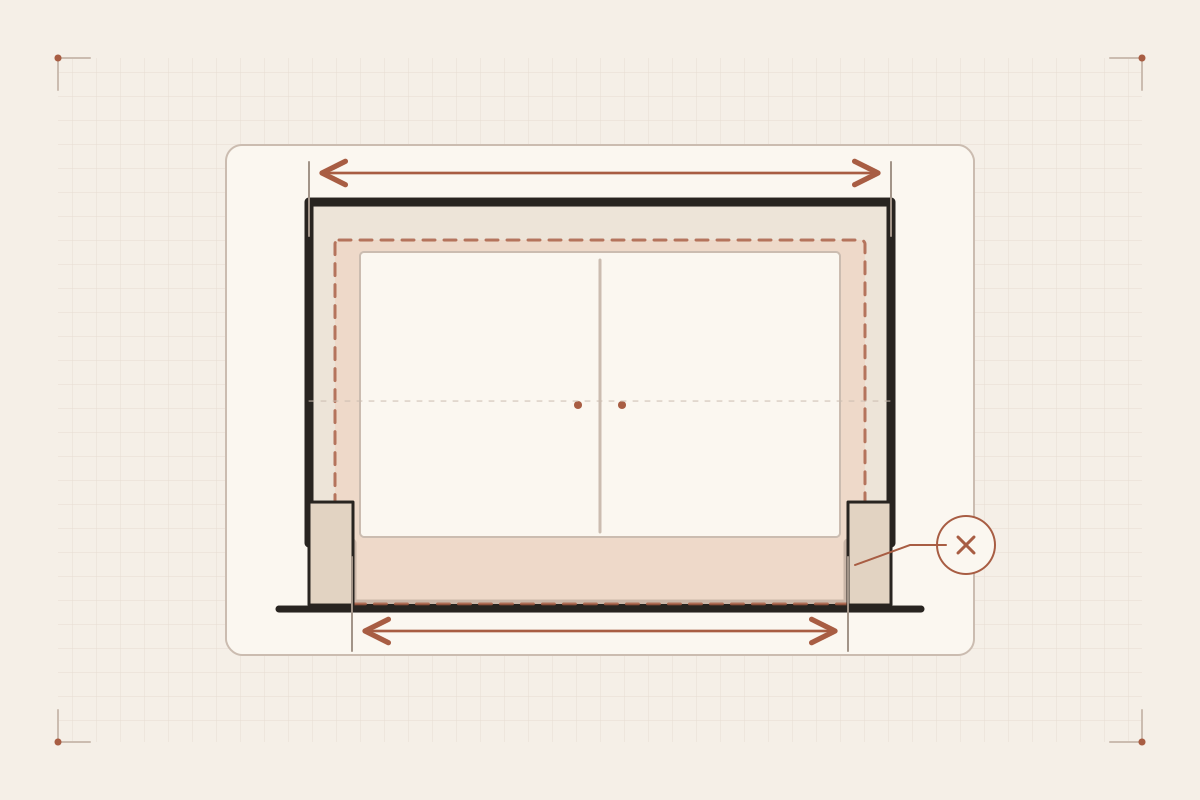
Measure between the protrusions that reduce usable width, including trim, handles, radiators and meter or utility covers. Then mark the open depth of the cabinet, drawer or shoe compartment you are considering. Hang the longest and bulkiest coat you normally wear from a temporary hook if you can arrange one safely, and observe how far it projects into the route.
Check that you can still reach switches, intercoms and any required controls. The measurement guide for recording door swings and wall projections makes it easier to give a supplier or installer the relevant details. If a cabinet needs anchoring, check the building constraints and product instructions first.
Use the entrance with two people present
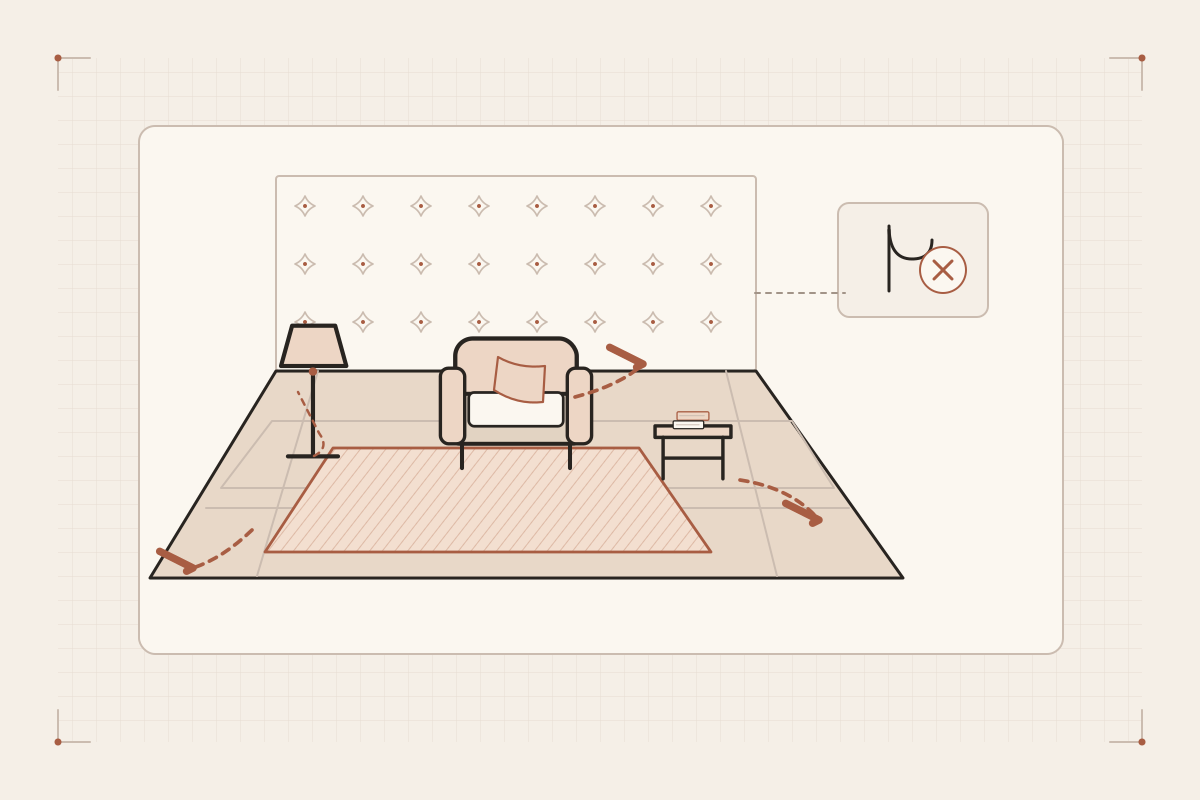
Place a stand-in box where you would like a bench or slim cabinet, and test the hall with a person changing shoes while someone else enters. Try walking in with the widest object you regularly carry. Check how guests will know where to put their belongings if all the hooks are occupied.
Keep the first arrangement modest. If the hallway cannot take furniture and seating together, try storing shoes inside the next room and moving the seat to an existing recess. A more distant but fully usable place may suit shoes you only wear occasionally. Keep a note of where visitors can put bulky coats when the usual space is full.
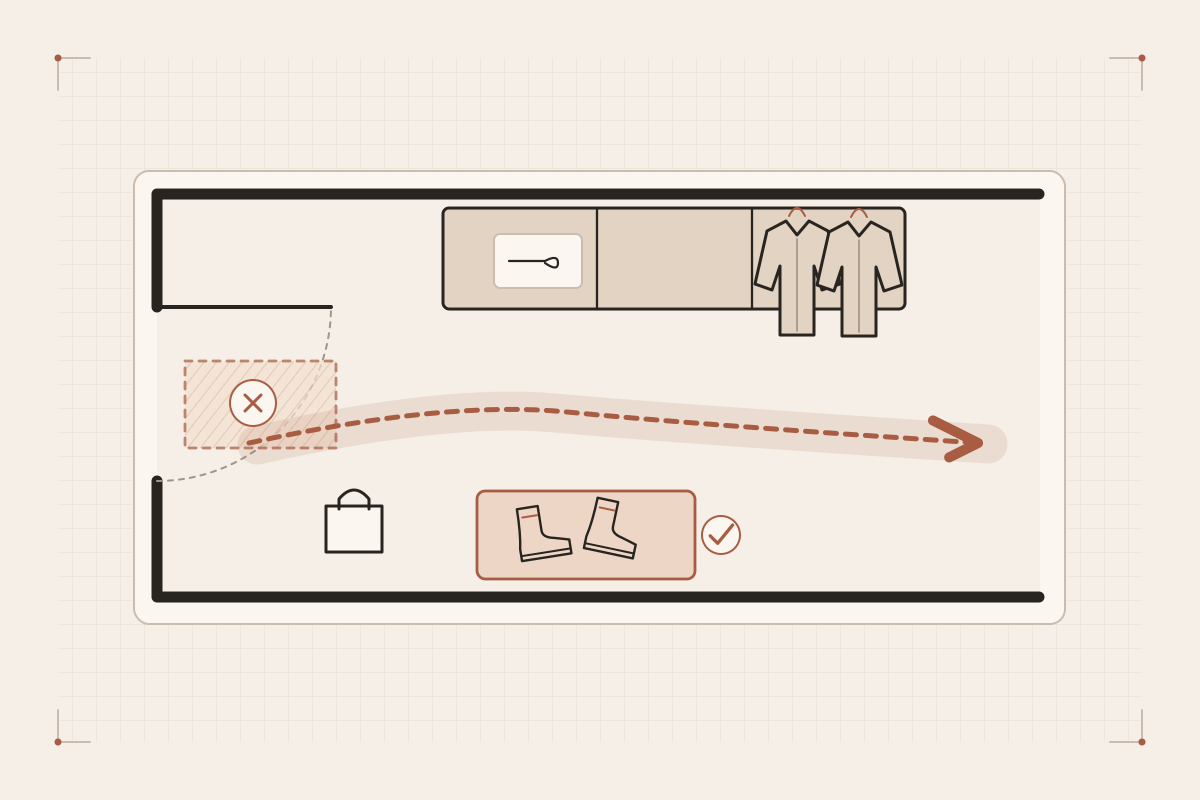
An illustrative entrance with an inward-opening door
A household considers a shoe unit beside the hinge side of the front door. A cardboard stand-in shows that it prevents the door from opening fully. They use the far wall for shallow storage, put the wet-shoe tray beyond the main swing and leave room to set down groceries while opening the door.
Limits and checks
- Keep required egress, building controls and shared circulation clear. Follow any building and local requirements for hallway storage and secure furniture as instructed.
Sources and further reading
- U.S. Consumer Product Safety Commission Anchor It campaign — Provides guidance on tip-over prevention for cabinets and other storage furniture.