Choose a busy half-hour to observe
List the people, objects and surfaces involved in a morning departure or evening return. Where does a bag wait while someone takes off a coat? Where are wet clothes put, and who needs to pass beside them? Include the quieter conflicts such as homework beginning while dinner is prepared or a young child trying to sleep during a call.
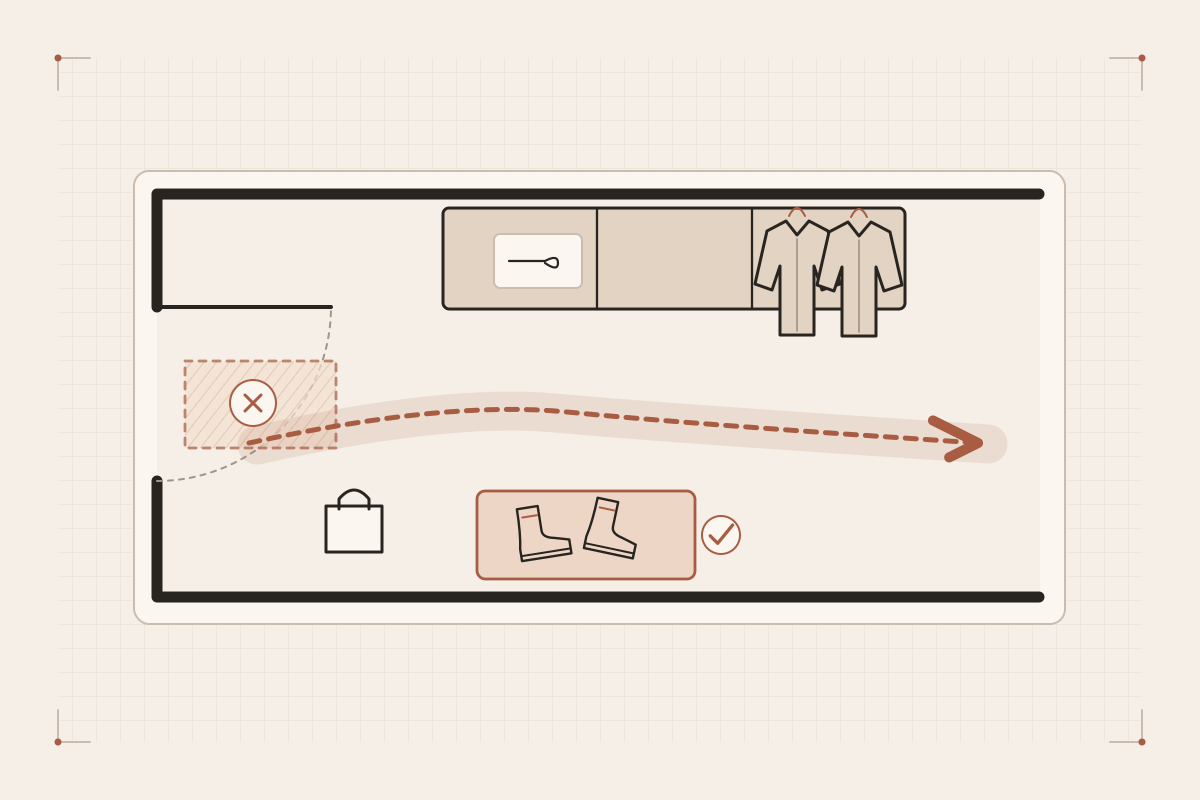
Choose two recurring problems to solve first. Give objects an immediate temporary landing spot if they have to wait before being put away. Keep school papers beside the surface where someone reviews them, and place a basket for items heading out near the departure route wherever it can stay out of the opening door’s path. For a tight entrance, map the entry route and the items that gather beside it.
Assign storage by who needs to reach it
Place regularly used objects where their intended user can see and reach them safely. Give a child a recognisable place for a school bag and establish a different location for adult-only items. Store heavy items low in suitable furniture and follow its anchoring instructions. Decide which belongings are handled every day and shift seasonal objects out of the area everyone needs.
Choose containers you can identify while they are closed. A basket whose entire contents have to come out to find a single charger may make sense for spare supplies and prove awkward on a school morning. Divide a shared drawer by activity and confirm everyone knows which parts of it they use.
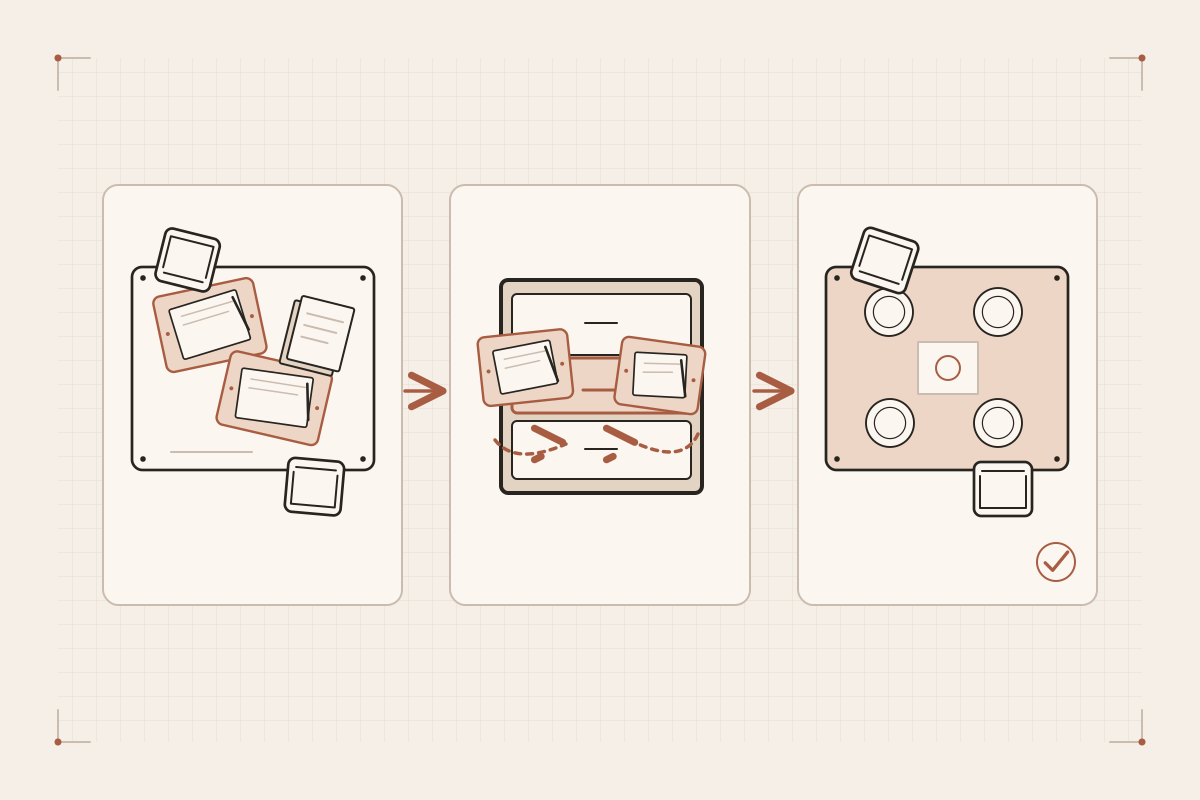
Set up a quick end to each activity
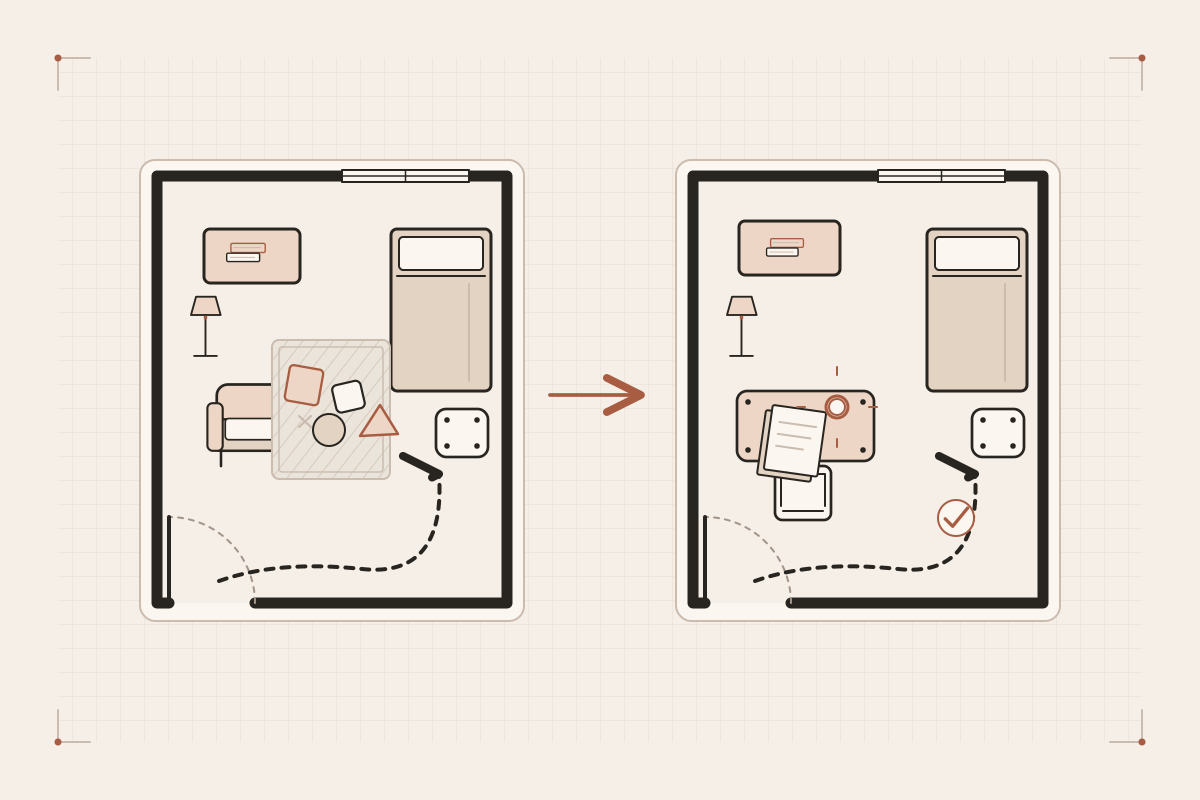
Put everything needed for homework, crafts or a work call in containers that travel between storage and the activity surface. If the dining table needs to be ready for dinner, assign a nearby spot where a project can sit with its pieces intact. Test the move using the actual objects and check where the chairs go during the change.
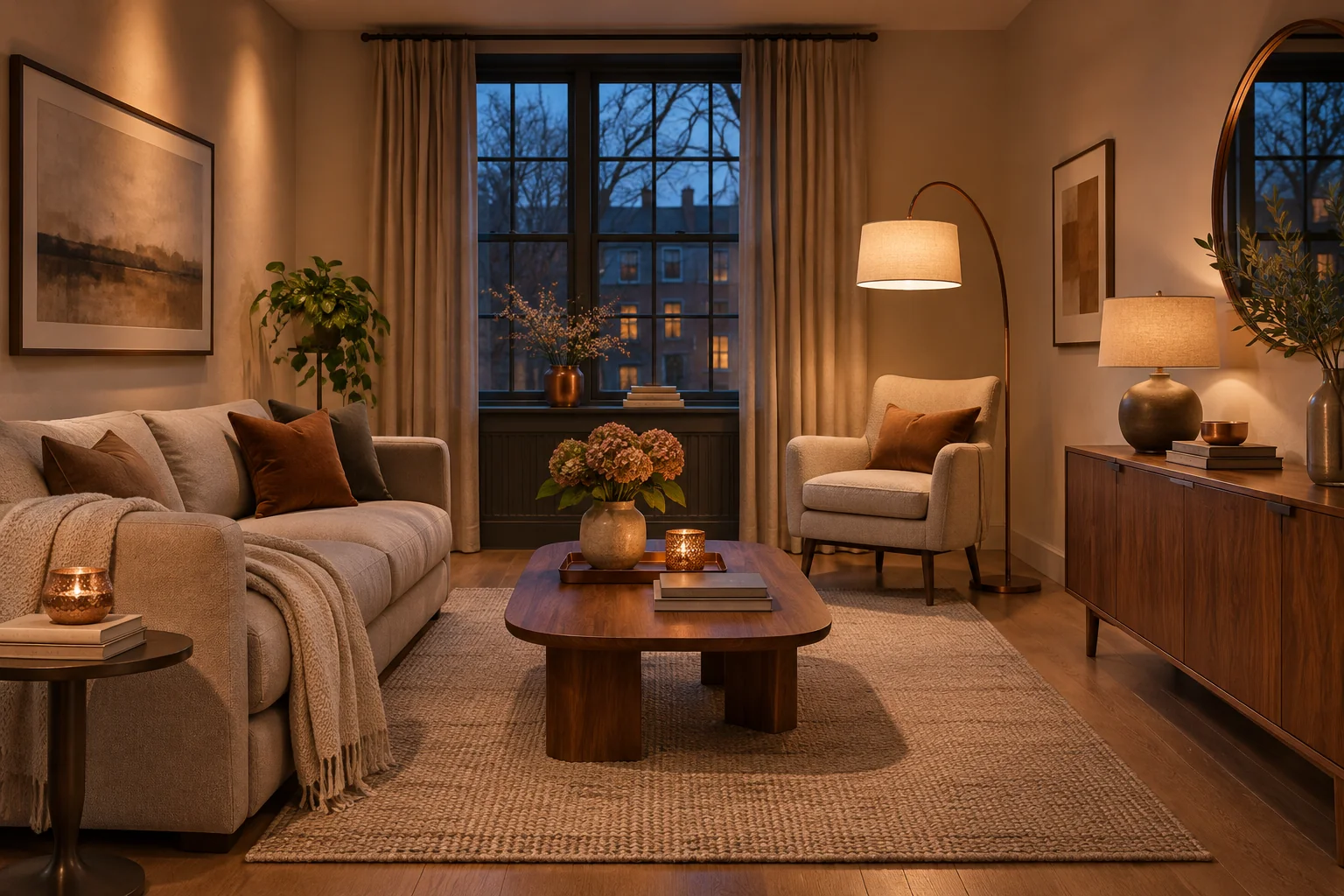
Leave a place for someone to do a quiet activity while the main table is occupied. A chair with a reachable lamp may be enough for reading. Keeping that seat available may matter more than adding another shelf in a room already used by several people.
One bedroom, a child and different bedtimes
Illustrative brief: two adults and a school-age child share a small apartment. First write down where everyone sleeps, studies and keeps everyday belongings. Room names alone do not show which activities clash.
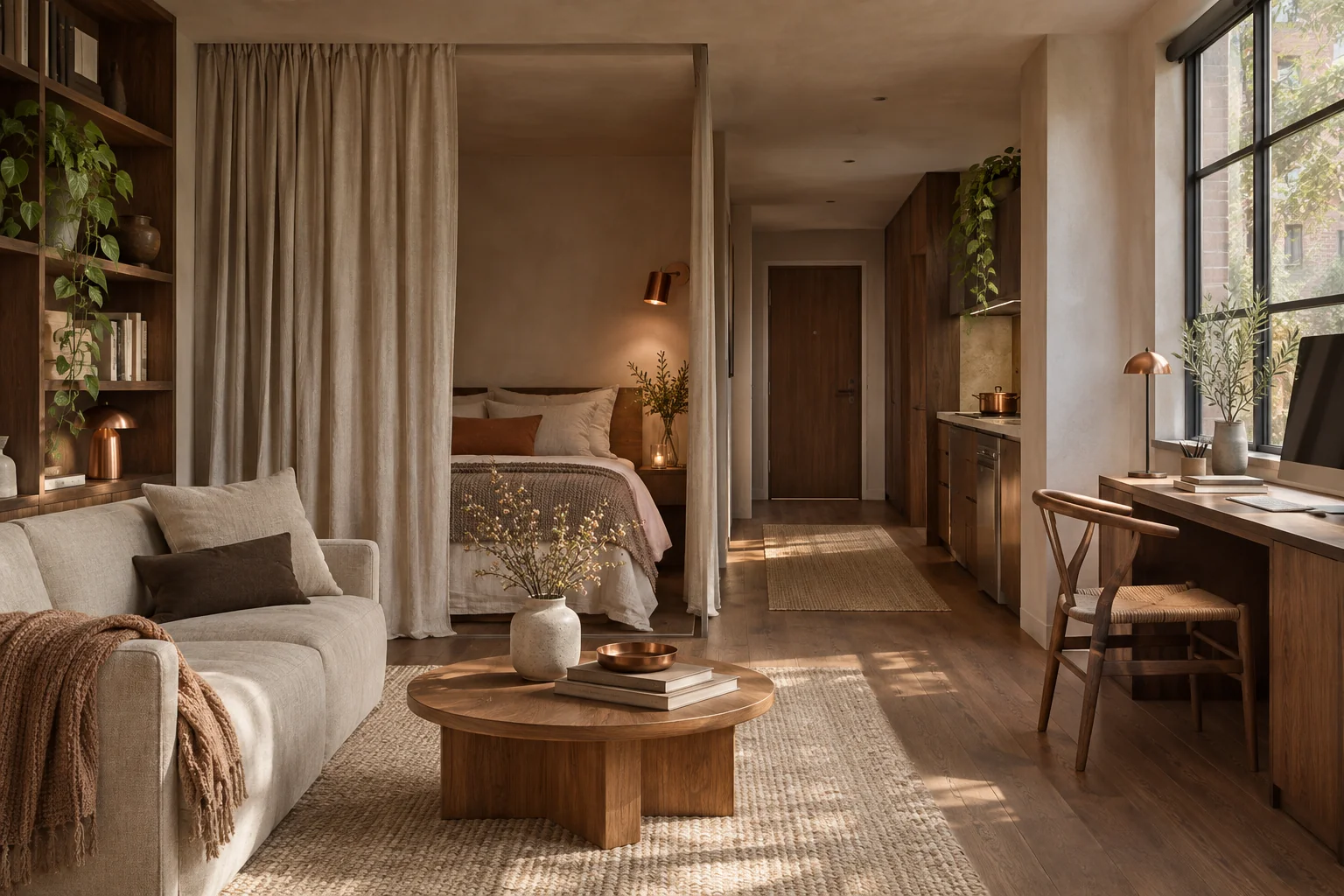
Compare a protected sleeping area for the child with a shared bedroom and a separate daytime study place. In each option, trace what happens when an adult works late or someone needs the bathroom after bedtime.
Choose the arrangement that the household can reset every day. A sofa bed is only a useful trade-off if bedding has a nearby home and opening it does not block the route. A new enclosed room needs separate checks for light, ventilation and local requirements.
An illustrative school-night layout
Imagine two children using the dining table before dinner. School materials are stored in a cabinet across the route to the kitchen. The family clears one drawer near the table for paper and chooses a tray each child can move to an approved shelf between sessions. The table becomes available again while each unfinished project stays together.
Limits and checks
- Plan for age, supervision and mobility. Furniture anchors, window treatments and storage for hazardous items need checks appropriate to the product and the household.
Sources and further reading
- U.S. Consumer Product Safety Commission Anchor It campaign — Provides household furniture tip-over prevention guidance.
- U.S. Consumer Product Safety Commission window covering cords — Explains the child strangulation risk from accessible cords and identifies cordless coverings as the safest choice.