Sort by length, weight and how often you reach it
Measure the longest hanging clothes and count the categories that need shelves or drawers. Put regular clothing at comfortable reach, place heavier items on suitable low shelves and keep lighter seasonal items in higher storage if you can access them safely. Give worn clothing a separate place if it frequently ends up on the chair or bed.
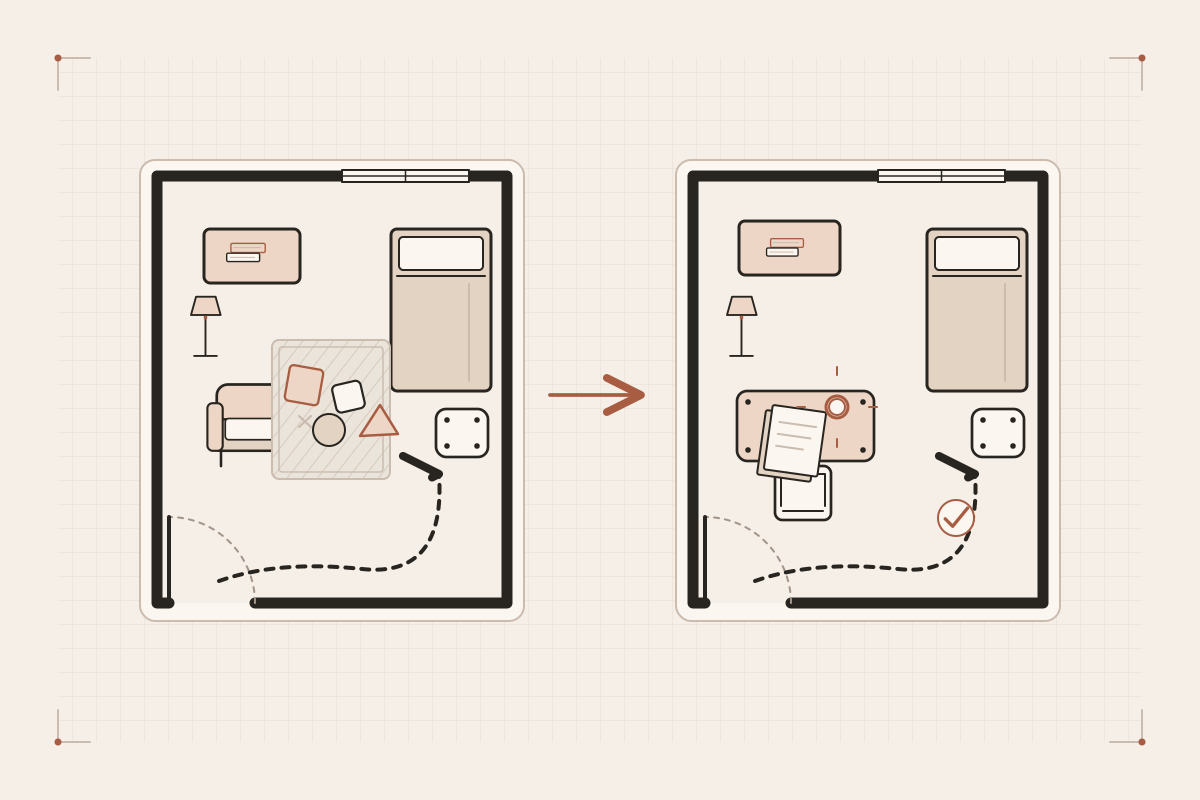
Choose a realistic landing spot for laundry and for the outfit you are getting ready to wear. The best wardrobe position may be beside that spot or within reach of the mirror. Plot the path someone takes to get dressed while the other person is still in bed.
Compare the space required with the furniture in use
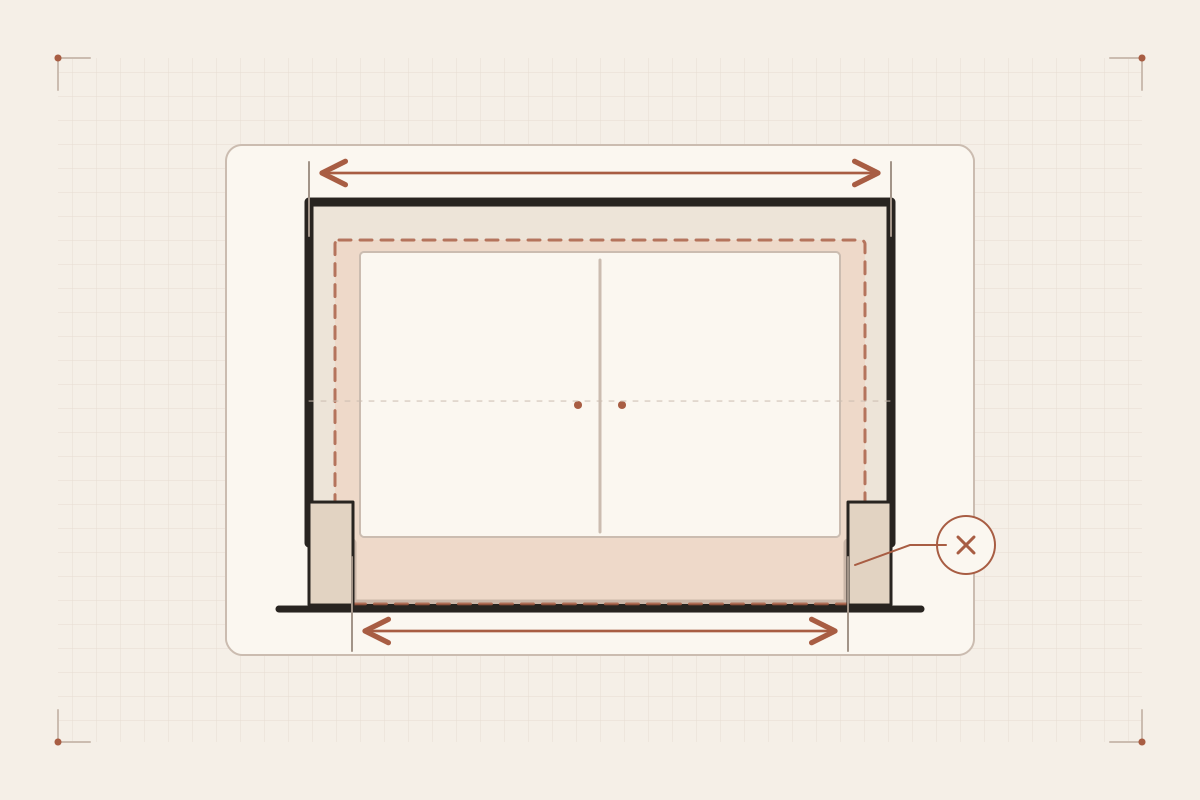
Trace the open door and drawer on the floor as well as the cabinet body. A hinged door needs room to swing, and a sliding wardrobe requires room for the door tracks and gives access to different parts of the interior as it moves. An under-bed drawer also needs somewhere to move outward on the side where it will be used.
Measure the ceiling along the proposed wardrobe position, especially in a room with a slope. Assembly can require additional space beyond the finished product’s height. Check the correct instructions and required fixing points before ordering. The room measurement method for uneven walls and tight alcoves helps you record the dimensions you need to confirm with the supplier.
Rehearse dressing, laundry and bedtime
Put a folded stack or laundry basket where you plan to stand. Ask another person to enter, pass or approach the bed while the wardrobe or storage drawer is open. Try the same routine in your normal evening light. Move the handles, lamp or mirror on your plan if reaching them becomes awkward with a door open.
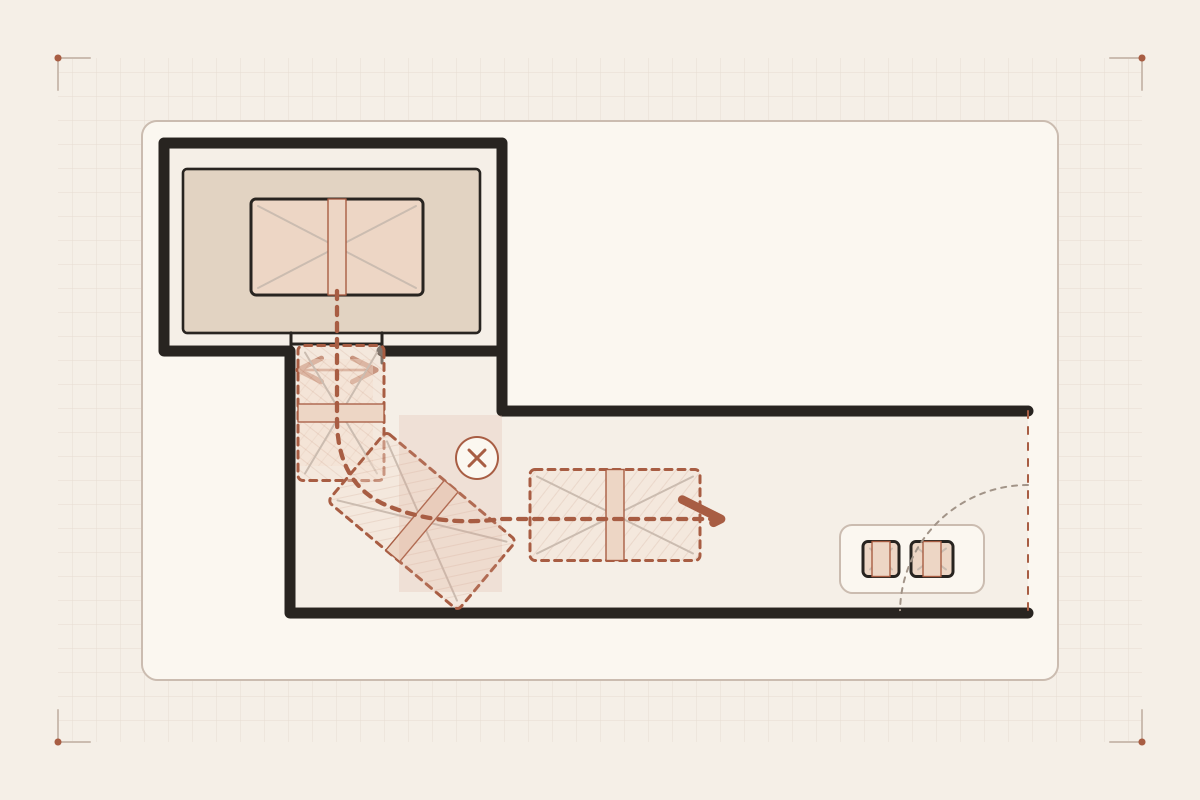
Consider dividing the storage between two positions if you rarely need everything at the same time. A shallow unit for folded clothing can serve the bedside route while a deeper wardrobe elsewhere takes the hanging clothes. Verify both positions independently, including the route through the home before delivery.
An illustrative wardrobe beside a bed
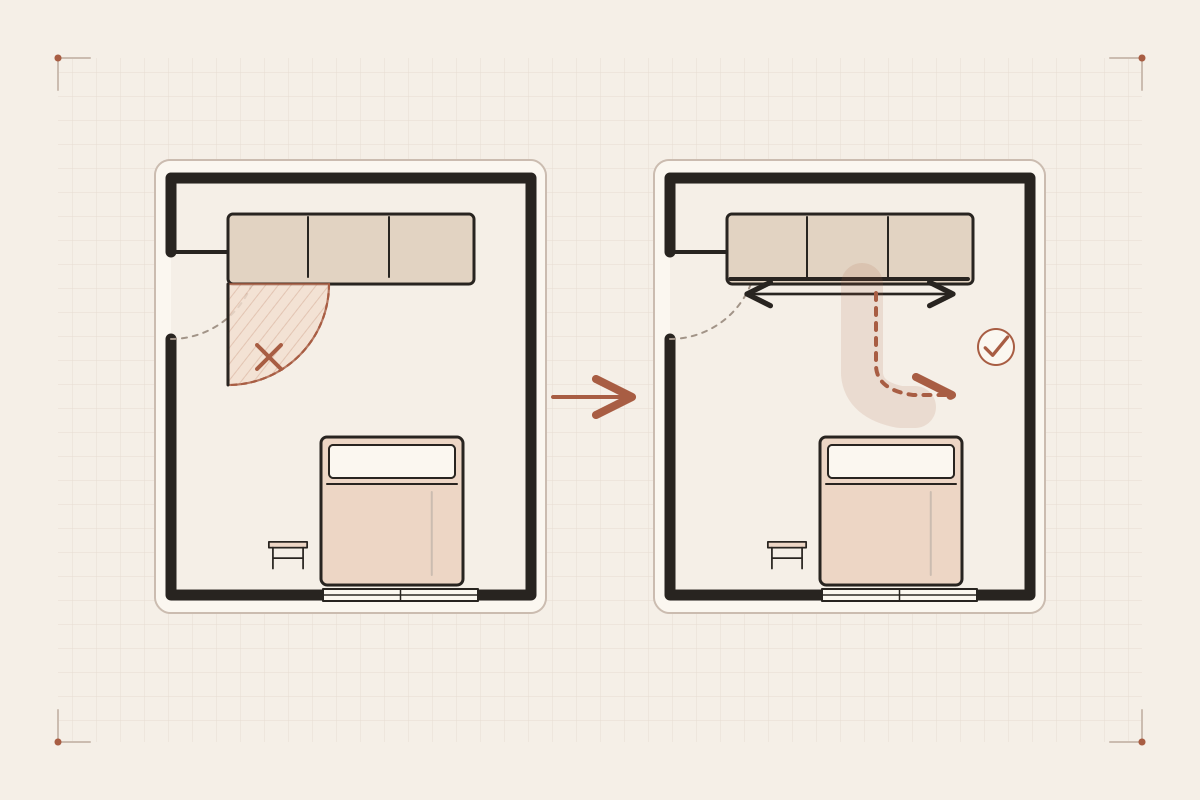
A sample bedroom has room for a wardrobe body opposite the bed. When the household tapes the full swing onto the floor, an open door interrupts passage to one bedside. They compare a sliding model and a shallower drawer unit, test what fits their clothing inventory, and select the sliding model after checking the track depth and assembly space.
Limits and checks
- Confirm the specific product’s wall anchoring, floor suitability and assembly requirements. Have built-in cabinetry measured on site before fabrication.
Sources and further reading
- IKEA PAX wardrobe planning steps — Gives a manufacturer example of planning wardrobe frames, doors and interior fittings.
- U.S. Consumer Product Safety Commission Anchor It campaign — Explains why furniture with drawers, doors and shelves needs appropriate tip-over prevention.