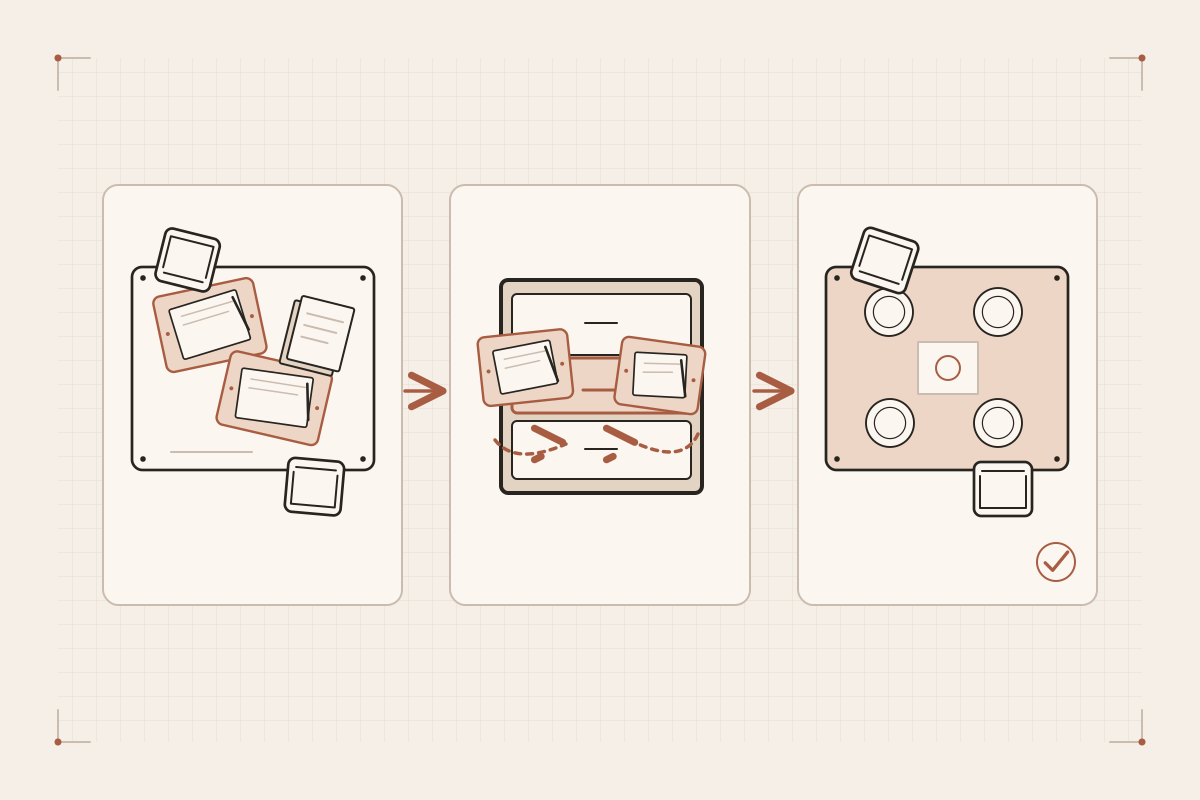
Give sleep and floor play clear places
Sketch the bed, door, window, heater and fixed furniture. Use the bed position to decide which part of the floor stays available for building, play or changing clothes. Test whether a parent can approach the bed and help with bedding without moving storage. Keep the approach easy to use at night.
Choose the storage that a child needs to reach independently and the items that an adult needs to control. Decide how toys return to storage after play, using categories that are easy for the child to recognise. A modest container for the toys used most often may make daily cleanup simpler than a deeper cupboard across the room.
Reserve a place that can become a study area
Mark a future study location where an appropriate seat, light and equipment could work. Until study space is needed, the same part of the room can hold movable play pieces or a reading chair. Keep the storage adaptable by checking whether the intended shelves and fittings can be changed under the manufacturer’s instructions.
Plan for a simple shift when a new activity starts. Ask whether the bed can stay where it is if the room gains a desk, and check that outlets and cords can be managed in both arrangements. For wardrobe access, test the working space needed for bedroom doors and drawers.
Review the room from a child’s height
Check whether the arrangement invites climbing in order to reach a favorite object or see out of a window. Install required furniture restraints following the manufacturer’s guidance with appropriate fixings. The U.S. Consumer Product Safety Commission identifies cordless window coverings as the safest option for children because accessible cords can present a strangulation hazard. Keep furniture and beds away from window covering cords.
Review any age, weight or use limits before reusing furniture. Look at where an adult puts down a bag, medicine or small items when helping with bedtime. Assign an adult-controlled place where those belongings can be stored securely.
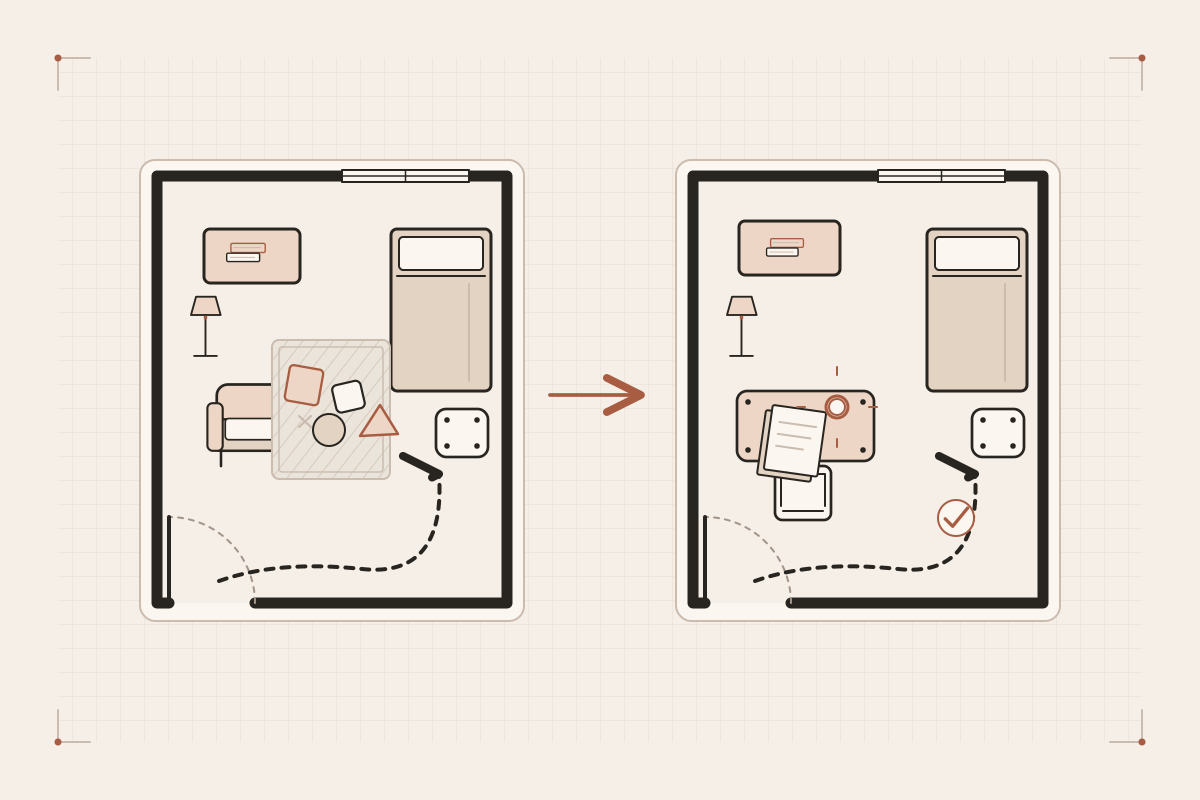
An illustrative room that gains a first desk
A child’s example room has a wall fit for a small desk later. For now it holds a reading chair and an approved low storage unit that can move when the reading chair is removed. When the desk arrives, the bed and path to the door stay in place, and the household checks the new light and furniture arrangements.
Limits and checks
- Apply current local safety guidance and the product instructions for the child’s age and abilities. Recheck the room as reach, mobility and activities change.
Sources and further reading
- U.S. Consumer Product Safety Commission Anchor It campaign — Explains furniture restraint and tip-over prevention.
- U.S. Consumer Product Safety Commission window covering cords — Explains cord hazards, keeping furniture away from cords and the preference for cordless coverings.